From Idea to Production
From idea to production
Good ideas do not become products through sheer execution.
They become products when there is enough direction to turn intention into a system, the system into operations, and operations into value.
Building something scalable starts long before technology. It starts with understanding the problem, defining what really matters, and organizing people, decisions, and resources around a shared goal.
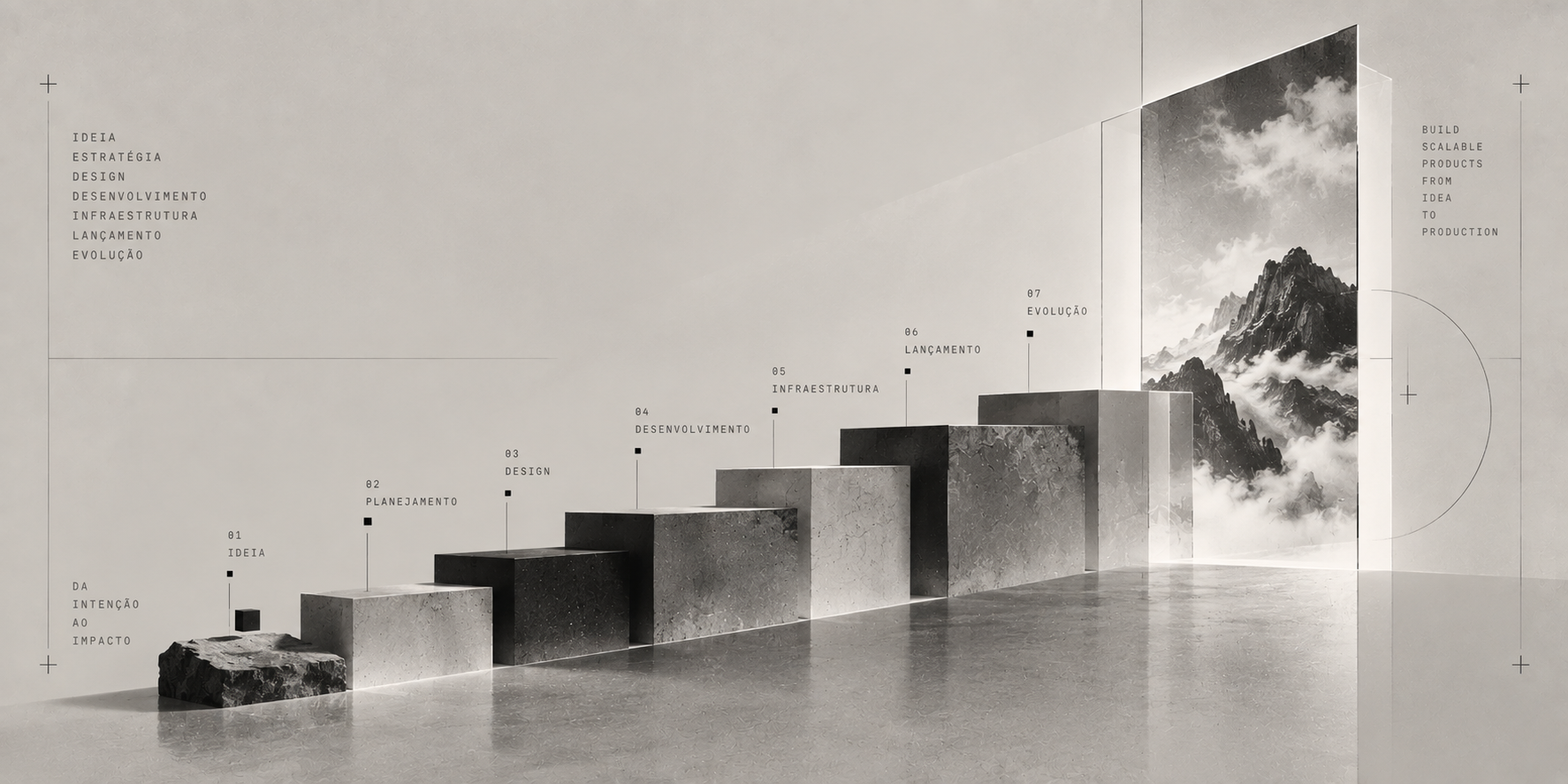
Engineering begins with direction
Product engineering is not only about choosing an architecture, stack, or infrastructure.
It is about deciding how a solution should begin so it can keep working as it grows.
That means considering context, dependencies, risks, maintenance, experience, operations, and evolution from the start.
A technical decision never exists in isolation. It affects cost, speed, flexibility, and the ability to respond in the future.
That is why I see engineering as a discipline of decisions.
Technology comes after clarity.
Scalability is organizational too
Products do not fail to scale only because of technical limitations.
They also fail when they depend on context held by only a few people, when decisions go unrecorded, or when priorities change without clear direction.
Simple processes, well-defined responsibilities, and consistent communication are part of a product's architecture.
Management reduces uncertainty
Leading a project does not mean controlling every detail.
It means creating enough clarity for decisions to happen with speed and autonomy.
Goals need to be understood. Risks need to surface early. Dependencies need to be visible. Progress needs to represent outcomes, not just activity.
When that happens, product, design, and engineering stop working as separate stages and begin to operate as one decision-making system.
Production is not the finish line
Putting something into production is simply the moment a hypothesis meets reality.
That is when use, operations, and behavior begin to show what truly works.
Strong products are built with room to observe, learn, and change direction without rebuilding everything after each new discovery.
That capacity to evolve needs to exist from the start.
In the end, turning an idea into a product is not about reaching the first version faster.
It is about building a foundation that can support the next ones.
Ideas start products. Direction, engineering, and management keep them evolving.