Building Products, Not Just Features
Building products, not just features
Building a product is not about shipping more. It is about understanding what truly deserves to be built.
It is easy to measure progress by the number of features launched, tickets completed, or new possibilities added. But the volume of work delivered does not necessarily mean progress.
Products gain value when every decision has a clear reason: what problem are we solving, for whom, and why?
A new feature adds capability, but it also adds complexity. More flows to understand, more decisions to maintain, and more touchpoints for the user. That is why building well also means knowing how to simplify, prioritize, and sometimes decide not to build.
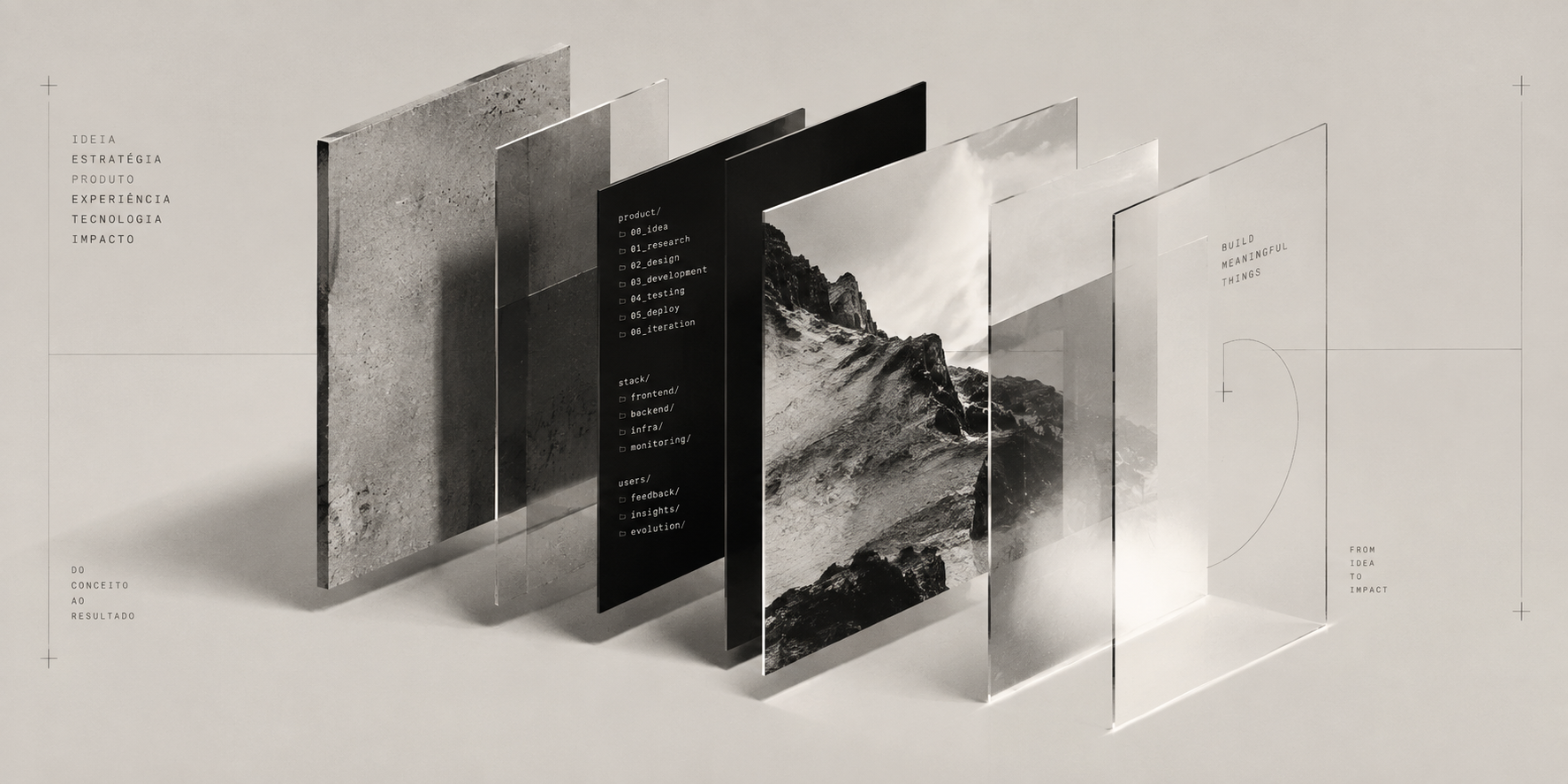
Clarity before speed
Speed matters. Direction matters more.
Teams can ship quickly and still drift away from the problem they should be solving. When product, design, and engineering share context, decisions stop being merely technical or visual and start serving the same goal.
Technology becomes the means to turn that intention into something reliable, simple, and scalable.
Launch is not the finish line
A product starts to prove its value when it meets real people.
After launch, the most important signals emerge: where friction exists, what people actually use, what can be simplified, and where there is room to evolve.
Building a product is a cycle of understanding, deciding, shipping, observing, and improving.
In the end, strong products are not the ones that do more things.
They are the ones that make clear what matters, who it matters to, and what value they create.
Features are deliverables. Product is direction.