Motion, Interaction & AI — Designing Beyond Static Interfaces
Motion, interaction, and AI - designing beyond static interfaces
Interfaces do not have to merely respond.
They can guide, anticipate, and create a sense of continuity between intention and action.
Motion, interaction, and AI expand that ability when they stop being isolated effects and become part of the experience's underlying logic.
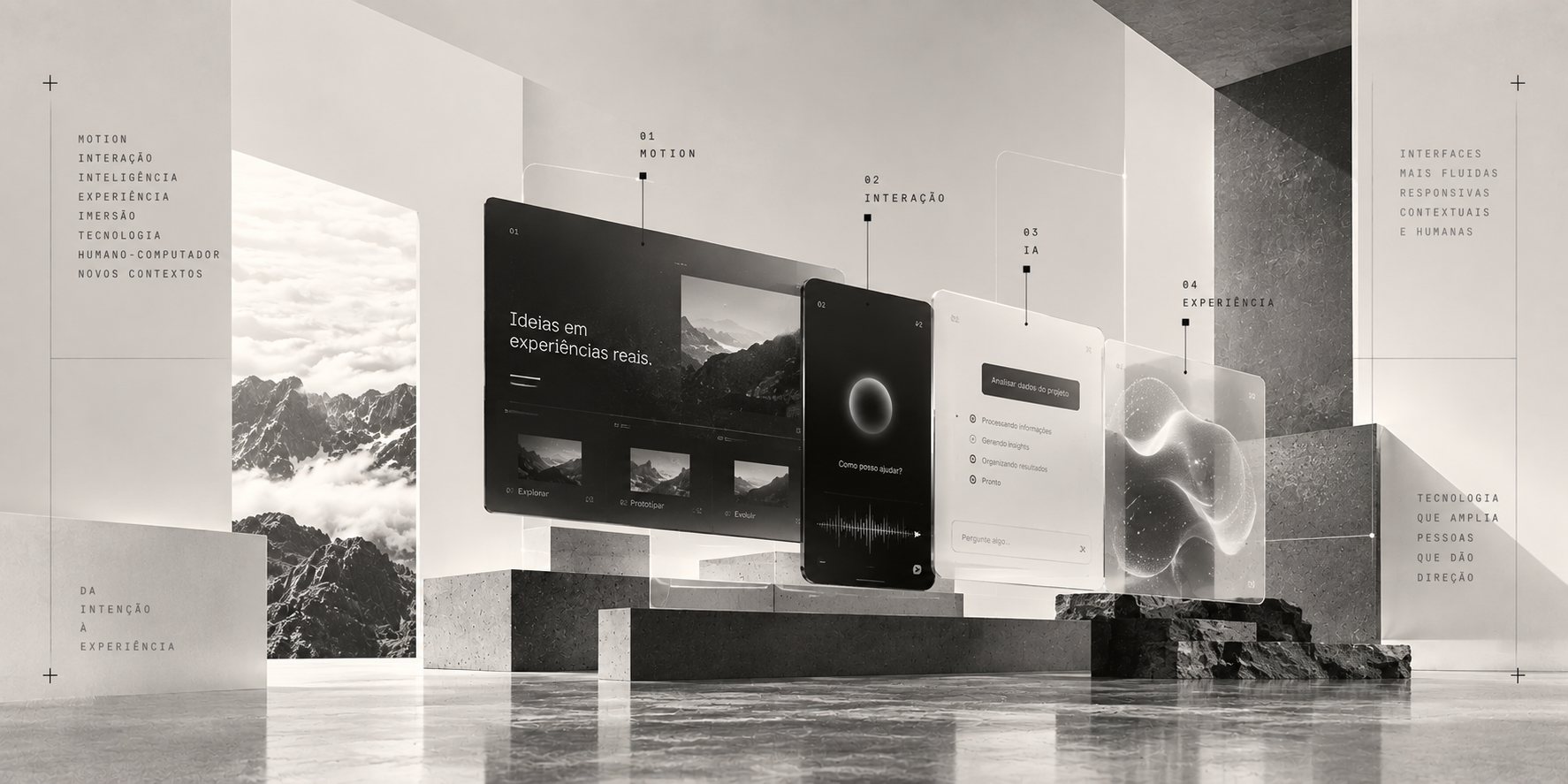
Motion communicates too
A transition can signal hierarchy.
An animation can explain a change of state.
A visual response can remove doubt before any text appears.
That is why motion should not exist just to make an interface more attractive. It needs to reinforce context, rhythm, and understanding.
When applied well, motion reduces cognitive effort and makes the experience feel more natural.
Interaction shapes perception
Digital experiences are perceived in small moments.
Response time.
The way an action confirms intent.
How elements enter, leave, and reorganize.
These details influence the sense of quality as much as layout, identity, or content.
For me, designing interaction means thinking about how an interface behaves, not only how it looks.
AI as a layer of interaction
AI is beginning to play a new role in digital products: not only as behind-the-scenes technology, but as part of the interface between people and systems.
Natural-language commands, adaptive interfaces, and contextual responses reduce the distance between intent and execution.
That changes how we design experiences.
The interface stops being merely a set of screens and becomes a layer that can interpret context, anticipate needs, and respond more dynamically.
In this setting, human-computer interaction becomes even more important.
It is not enough for a system to be intelligent. It must make that intelligence understandable, predictable, and useful to the person on the other side.
AI expands capability. The interface turns that capability into experience.
Beyond the static interface
As digital products become more contextual and adaptive, the boundary between design, interaction, and system becomes less distinct.
That creates room for more fluid, responsive, and immersive experiences.
The goal is not to add more motion.
It is to use motion, interaction, and intelligence to make technology clearer, more intuitive, and more human.
A good interface shows. A good experience responds.